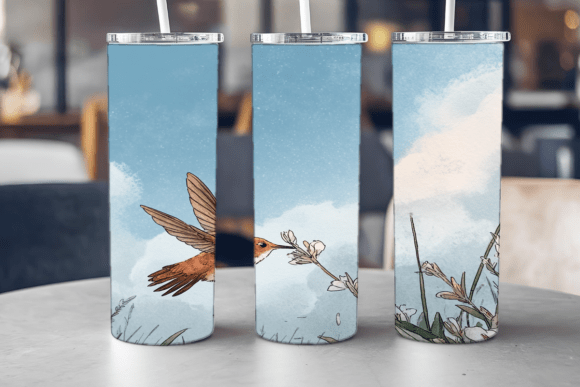
Nectar Seeker Hummingbird Tumbler Design Review
When I first opened the file for the Nectar Seeker Hummingbird Tumbler, my initial reaction was one of curiosity mixed with a healthy dose of skepticism. As someone who has spent years evaluating digital assets for commercial embroidery, I know that a pretty preview image often hides technical nightmares waiting to happen in the hoop. The product description promises an instant download of a high-resolution PNG wrap file sized for 20oz skinny tumblers, but as an embroidery designer, my mind immediately jumps to how this translates when stitched rather than printed. While the listing explicitly notes this is a sublimation-ready graphic and not a native machine embroidery file, the visual composition offers valuable lessons for anyone creating Tumbler Wraps or designing graphics that might eventually be adapted for textile applications.
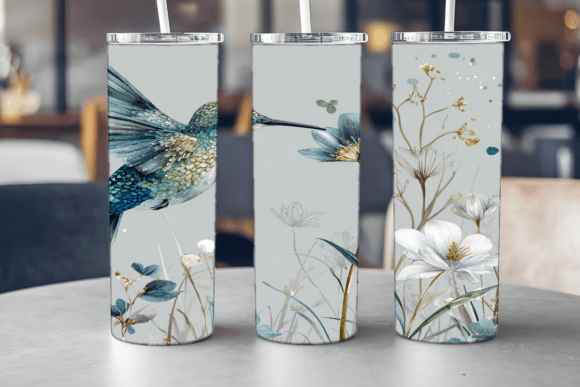
The mood created by the Nectar Seeker Hummingbird Tumbler is undeniably lively and organic. The layout feels designed to capture movement, which is essential when trying to depict a hummingbird in mid-flight. In my experience reviewing design assets for small business owners and Etsy sellers, the ability to convey motion without cluttering the frame is a rare skill. This particular design leans into a natural aesthetic that would fit perfectly on a handmade gift for a nature lover or a boutique product line focused on wellness and outdoor living. However, before we can discuss its potential on fabric, we must address the fundamental distinction: this is a raster-based print file intended for sublimation, not a vector or stitch-count file ready for your embroidery machine.
Let me walk you through a real-life scenario where I imagine this design being repurposed or used as a reference. Suppose I am preparing a custom embroidered tote bag for a client who runs a local flower shop. They want a design that captures the essence of spring without looking generic. If I were to use the Nectar Seeker Hummingbird Tumbler as a direct template, I would need to trace the outlines and digitize them manually. The challenge here lies in the detail level. Hummingbirds are notoriously difficult subjects for embroidery because of their tiny size relative to the thread thickness. A design that looks crisp on a glossy tumbler surface often loses definition when converted to satin stitches on canvas or twill.
If this design were successfully adapted into a true machine embroidery design, the execution would depend heavily on the chosen thread colors and the fabric texture. On a dark-colored sweatshirt, the lighter tones in the bird's plumage might get lost unless high-contrast threads are selected. Conversely, on a white tea towel, the fine details could become muddy if the stitch density is too high. This brings us to a critical point for any crafter or apparel decorator: always test the design concept on scrap fabric first. Even though this specific asset is a digital file for printing, understanding how its visual elements translate to thread helps in making better decisions about future projects.
For those of you selling finished products, the visual appeal of the Nectar Seeker Hummingbird Tumbler suggests a strong brand identity. It screams "handmade" and "personalized," qualities that drive customer trust and engagement. Imagine this design featured on a mockup of a baby onesie or a holiday gift set. The whimsical nature of the subject matter makes it highly giftable, appealing to parents looking for nursery decor or grandparents seeking unique presents. However, caution is required when considering the application on curved surfaces like caps or hats. The original design is likely optimized for a flat, cylindrical tumbler shape. Transferring that curvature to a structured cap brim requires careful adjustment of the underlying geometry to prevent distortion.
There are specific scenarios where this type of graphic needs to be handled with care. If you are working with textured fabrics like heavy denim or boucle wool, the fine lines typical of a hummingbird design might not register clearly. Similarly, on stretchy knits, the design needs to be stabilized properly to avoid puckering. While the product description mentions it is a straight ta... (likely referring to a straight file or similar format for printing), it does not provide specific stitch counts or hooping instructions because it is not an embroidery file. This is a crucial distinction for commercial embroidery projects. You cannot simply load a PNG into your machine; you need a proper .dst, .pes, or .exp file with defined stitch paths.
For the creative entrepreneur looking to expand their catalog, the Nectar Seeker Hummingbird Tumbler serves as an excellent inspiration board. It highlights the importance of color theory and composition in design assets. When creating your own embroidery project files, ask yourself: does this design work at the scale I intend? Can the details survive the washing process? For items that need frequent washing, such as aprons or kitchen towels, dense fill stitches can sometimes cause the fabric to stiffen or the design to crack over time. The Nectar Seeker Hummingbird Tumbler graphic avoids this risk in its current form because it is a print, but if you adapt it, you must ensure the stitch density is balanced for durability.
I also want to touch upon the licensing aspect, which is vital for Etsy sellers and small shop product creators. Before using any design commercially, whether as a print or an adaptation for embroidery, you must confirm the license terms. Does the purchase allow for end-product sales? Are there restrictions on the number of units? Since this is a digital embroidery file alternative meant for sublimation, the rules may differ from traditional embroidery patterns. Always check the fine print regarding commercial embroidery rights to avoid legal pitfalls.
Here are some practical notes for designers evaluating this style of artwork:
- Check Thread Color Contrast: Ensure the colors in the design will pop against your intended fabric background. Light birds on light backgrounds require careful shading.
- Review Stitch Density: If digitizing this for embroidery, keep the density low enough to maintain fabric drape but high enough to cover the underlay.
- Inspect Small Details: Tiny feathers or wings often disappear in smaller hoop sizes. Test the design in black and white mockups to see if the contrast holds up.
- Confirm Hoop Size: Verify that the final design fits within your standard hoops without requiring awkward re-hooping.
- Use Proper Stabilizer: For delicate fabrics, a cut-away stabilizer is often necessary to support the weight of the design.
In conclusion, while the Nectar Seeker Hummingbird Tumbler is technically a sublimation graphic and not a native embroidery file, its artistic merit makes it a worthy study for anyone in the crafting industry. It demonstrates how a well-composed image can elevate a simple product into a desirable gift item. Whether you are creating printable mockups for your online store or planning to adapt the concept into a stitched piece, the key is to respect the limitations of your medium. By testing on scrap fabric, comparing light and dark backgrounds, and adhering to proper stabilization techniques, you can turn a digital idea into a tangible finished product that delights customers. For the savvy maker, understanding these nuances is what separates a hobbyist from a professional craft business owner.