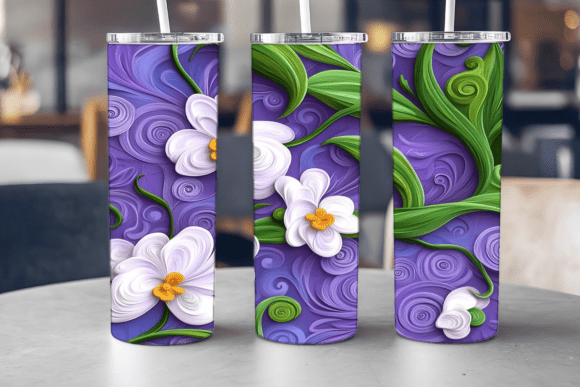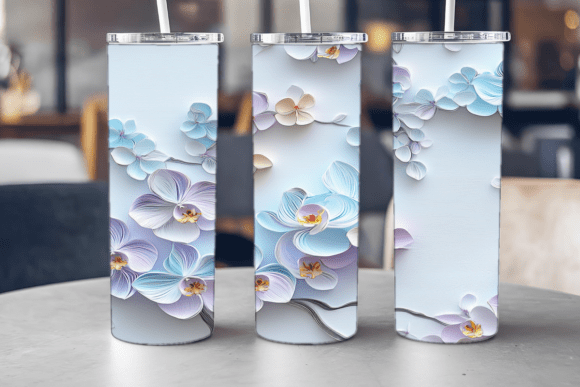
Golden Orchid Garden Tumbler Review
When I first opened the Golden Orchid Garden Tumbler file, my immediate reaction was one of visual delight. As someone who has stitched thousands of designs for clients ranging from boutique owners to hobbyists, I know that the difference between a "nice" design and a "sellable" product often lies in the details. This piece isn't just a collection of petals; it carries a specific mood—luxurious yet approachable, organic but structured. It feels like a design meant for someone who wants their handmade products to look expensive without actually costing an arm and a leg.
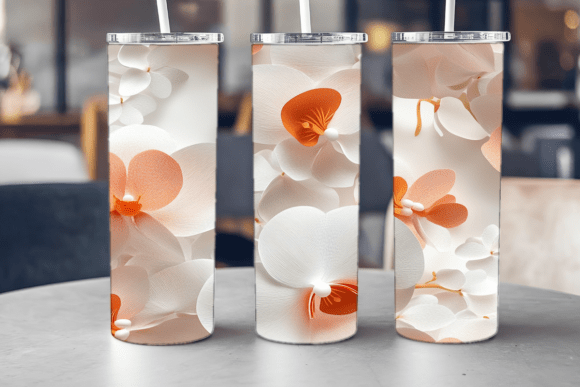
The prompt describes this as a Tumbler Wraps Graphics product intended for sublimation on a 20oz skinny tumbler. However, as a designer evaluating assets for broader use, I had to ask myself: could this translate to actual machine embroidery? Can this digital graphic be adapted into a robust embroidery file for physical goods? If we treat the Golden Orchid Garden Tumbler as a conceptual blueprint for a stitching project, the potential is massive. The layout suggests a vertical flow that hugs the curves of a container or a garment, making it a prime candidate for custom apparel and personalized gifts.
First Impressions and Design Personality
The golden hue of the orchid creates an instant sense of warmth. In the world of embroidery design, color theory is everything. Gold threads can easily look tacky if the stitch density is off, but here, the implied shading suggests a gradient that would render beautifully with variegated threads. The floral theme is timeless, which means it won't feel dated in six months. This is crucial for any Etsy seller or small shop owner looking to build a brand with longevity.
I imagine this design on a soft, cream-colored sweatshirt. The contrast would pop without being overwhelming. It has a personality that fits perfectly into a lifestyle brand focused on wellness, home decor, or artisanal crafts. It's not aggressive; it invites the viewer in. For a handmade product line, this level of sophistication elevates the perceived value of the item immediately.
Real-World Application: From Digital File to Finished Product
Let's walk through a real scenario. Imagine you are preparing for a holiday market season. You have a stack of plain canvas tote bags sitting on your table, waiting to become unique custom apparel pieces. You decide to adapt the Golden Orchid Garden Tumbler concept for these bags. Because the original design is sized for a 20oz skinny tumbler, the aspect ratio is tall and narrow. When transferring this to a tote bag, you would need to adjust the width slightly to prevent the flowers from looking squashed, but the core composition remains strong.
If you were to stitch this onto a baby onesie, the delicate nature of the orchid works well. Babies' clothes often require softer, less dense patterns to avoid scratching sensitive skin. The running stitch elements likely present in the leaves would provide a gentle texture, while the satin stitch on the petals adds a touch of sheen that mimics real flower surfaces. It transforms a generic gift into something personal and thoughtful.
Consider a kitchen towel for a wedding gift. The golden tones pair beautifully with white linen or beige cotton. When the finished product arrives at the bride's door, the intricate details of the Golden Orchid Garden Tumbler would signal that significant care went into its creation. It moves beyond a mass-produced item into the realm of heirloom quality.
Technical Considerations and Stitch Density
While the visual appeal is undeniable, putting this design into production requires technical precision. One of the biggest challenges with floral designs is managing stitch density. If the center of the orchid is too crowded with fill stitch, the fabric will pucker, ruining the drape of a t-shirt or the structure of a pillow cover.
Before committing to a full run, I always advise testing the design on scrap fabric. You need to check how the thread colors interact with the background material. Does the gold stand out against dark navy, or does it blend in? On a dark fabric, you might need a different underlay strategy to ensure the embroidery project looks crisp. Conversely, on light fabrics, the design might lose some depth if the thread choice isn't vibrant enough.
Another critical factor is the hoop size. Since the original intent is a skinny tumbler, the design is likely optimized for a smaller hoop. If you try to scale this up significantly for a large blanket or a jacket back, you might encounter issues with registration or detail loss. Always verify the dimensions before scaling. If you are working with a commercial embroidery machine, ensure your digitizer has accounted for the necessary pull compensation so the stitches don't distort the fabric grain.
Where to Use Caution
No design is a universal fit, and the Golden Orchid Garden Tumbler has its limitations. I would be hesitant to use this on highly textured fabrics like heavy wool or boucle. The needle simply cannot penetrate those materials cleanly enough to capture the fine lines of the orchid. Similarly, stretchy fabrics like spandex blends require careful stabilizer selection. Without a proper tear-away or cut-away stabilizer, the tension of the stitches could cause the fabric to ripple over time.
Detailed corners are another pitfall. If you attempt to place this design on a curved surface like a baseball cap, the top of the orchid might get distorted due to the curve. While possible, it requires advanced placement techniques. Also, for items that will undergo frequent washing, such as aprons or work shirts, ensure the design is anchored well. Loose edges on a complex floral pattern can snag during the wash cycle, leading to customer complaints.
Finally, consider the lighting conditions of your final product presentation. If you are creating printable mockups or taking photos for an online store, the metallic sheen of gold thread can reflect light differently than matte colors. You might need to adjust your photography angles to ensure the embroidery file looks true to life in your listings.
Practical Designer Notes for Success
To get the most out of the Golden Orchid Garden Tumbler, follow these steps:
- Test First: Always run a test stitch on a scrap piece of the exact fabric you plan to use. Check for puckering and thread breaks.
- Check Contrast: Ensure the thread colors provide enough contrast against your base material. A digital embroidery file might look great on a screen but fail in person if the colors are too similar.
- Inspect Details: Zoom in on the digitized version (if available) or the mockup to see if small details like stamens or leaf veins are clear. Tiny details often disappear when stitched.
- Verify Licensing: Before selling finished items made with this design, confirm the license terms. Is it for personal use only, or does it allow commercial resale? This is vital for any craft business owner.
- Use Proper Stabilizer: Don't skimp on stabilizer. It is the backbone of a clean embroidery project.
Ultimately, the Golden Orchid Garden Tumbler offers a versatile foundation for creative entrepreneurs. Whether you are designing a tote bag design, adding flair to a sweatshirt embroidery collection, or creating a special holiday embroidery gift, this asset provides the elegance needed to stand out. By understanding its strengths and respecting its technical requirements, you can turn a simple digital download into a premium handmade product that customers will love.
Remember, the goal is to create a brand consistency across your offerings. Using a cohesive, high-quality design like this helps establish trust with buyers. They see the attention to detail and assume the rest of your business operates with the same level of care. So, download the file, set up your hoop, and let the golden orchid bloom on your next masterpiece.